Pruning Muscadine Grapes for Beginners
(Updated: Dec. 4, 2024, 5:58 a.m.)
Understanding Muscadine Grapes
Muscadine grapes are the native grape species in Eastern NC. These grapes can be found growing wild on most properties and range in color from bronze-green, sometimes referred to as Scuppernong, to dark purple varieties known for their sweetness. These grapes have their own distinct flavor, thick skins, and seeds.Popular Muscadine Varieties
Popular muscadine varieties include ‘Carlos’, ‘Nesbit’, and ‘Noble’. Other grape varieties classified as bunch grapes or table grapes include Fox grapes and wine grapes.Factors to Keep in Mind When Growing Bunch Grapes in Pamlico County
Bunch and Fox grape varieties are typically grown in the Piedmont and Mountain regions, as Pierce’s disease prevalent in the Coastal Plain region can shorten the lifespan of bunch grapes. If you wish to try growing bunch grapes in Pamlico County, you may have limited success. Be conservative in your planting and follow recommended management practices found in the Extension publication Bunch Grapes in the Home Garden. As for muscadines, pruning and management is a little easier than bunch grapes.Optimal Growing Conditions for Muscadine Grapes
The best growing site for grapes is sunny locations with good internal drainage. Wetness is the greatest limiting factor in Pamlico County.Managing Wet Soil Conditions
If your soil has standing water after a rain, then either choose another site or consider creating a raised planting site. A raised planting bed of 6-8” with a diameter of 5-6’ would be ideal for wet conditions.Training Muscadine Grapes: The Single Wire Trellis
Training of grapes is important, and the standard trellis system recommended for home growers is the single wire trellis.Setting Up the Single Wire Trellis
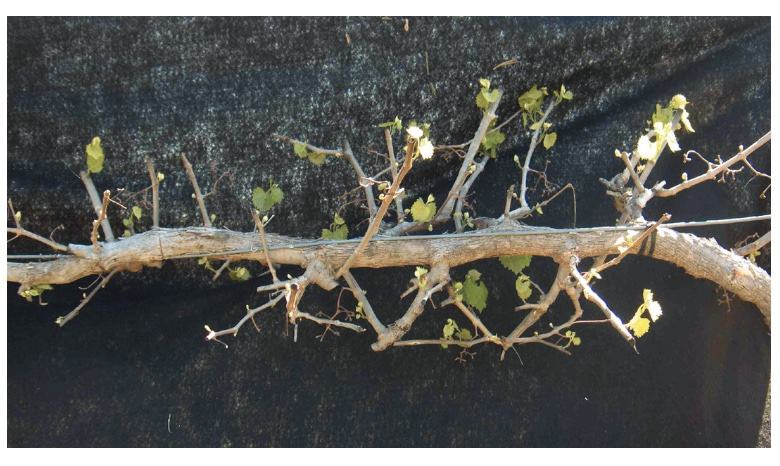
With this system, plants are planted between two poles 20’ apart, with a single wire stretched between each pole. This allows for the formation of two permanent fruiting arms, called cordons, to grow outwardly towards your poles. These cordons are maintained throughout the life of the planting, and from here all the fruiting wood is formed.Importance of Cordons for Fruit Production
When buds from the cordons begin to grow, they will produce the vegetative and fruiting wood for the new year. All fruit is born on 1-year old wood, and pruning is used to reduce the total number of fruiting buds that grow on these canes.Pruning Muscadines: A Step-by-Step Guide
Step 1: Prune During the Right Time
February is a good time to prune muscadine vines, but any time after leaf fall and before buds begin growth in the spring is acceptable. “Bleeding” of water from pruning cuts will occur, but there is no harm to the vine.Step 2: Identify 1-Year Old Wood for Pruning
Start your pruning efforts by identifying 1-year old wood, which is typically smooth and shiny and near pencil width in diameter.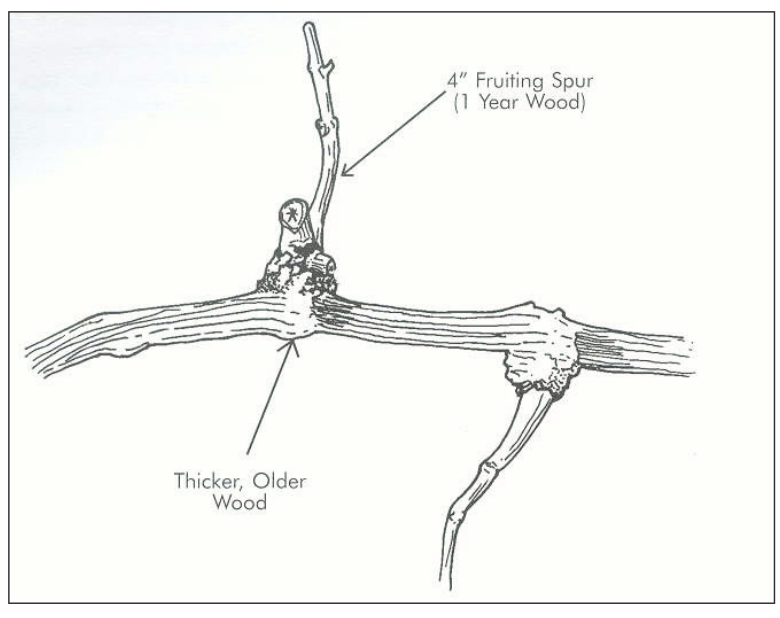
Step 3: Cut Towards the Cordon
Cut back vigorous growth towards the cordon (often times several feet of canes), leaving about 7-8 buds per cane. The transitional area between these 1-year-old canes and the permanent cordon is called a spur.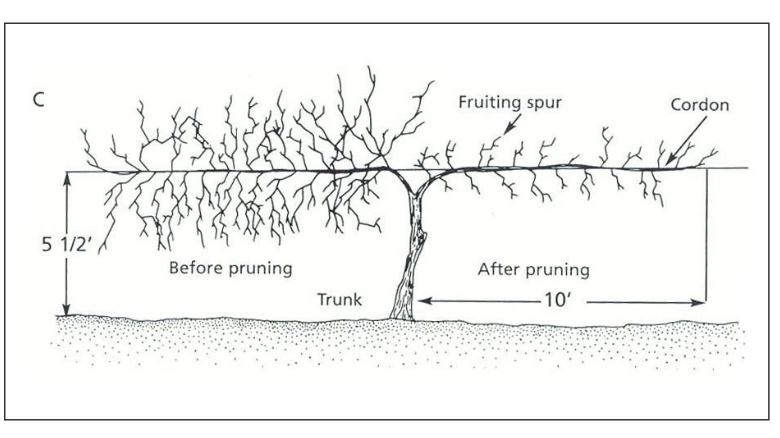
Step 4: Prune Back to the Same Spot Every Year
By pruning back towards this same location every year, you can develop fruiting spurs with spacing about 4-6” apart. This will help to create a balanced number of buds along the length of the vine that will maximize production.Step 5: Selectively Remove Spurs
After several years of pruning, you will notice that the fruiting spurs will grow further and further from the cordon. By selectively removing a few of the spurs each year, old dormant buds on the cordon will begin to grow, replacing these spurs and allowing fruiting wood to form closer to the cordon.Step 6: Cleaning and Maintenance
Remember to remove old canes that you have pruned and perform a general cleanup of the grape vine by raking fallen leaves and old fruit. If old diseased fruit remains around the vine, this can be a source of infection for the new season. Muscadines are tolerant of most pests and diseases and general sanitation from year to year is usually all that is needed to maintain healthy vines.Fertilize in the Spring
Fertilize mature vines in March with about a 1 pound of 10-10-10 scattered around the vine, but no closer than 21” from the vine. Another application in June may be needed if growth is slow. If vine growth appears vigorous or exceeds 3-4’ during the season, reduce your fertilizer rate. Remove weeds and turf from under vines to reduce competition and water when needed.Additional Resources for Pruning Muscadines
For more information on pruning muscadines, review the Extension publication A Step By Step Approach to Pruning Carlos Muscadine Grapes.Contact Your Extension Office for Assistance
You can contact Daniel Simpson at 252-745-4121 or Daniel_simpson@ncsu.edu if you have further questions.Join our mailing list!
Enter your email address to receive updates.
Written By