It has been a long, hot, dry summer, and many crops have suffered as a result. However, more frequent rain events are starting to occur, and long-range forecasts predict a strong El Niño pattern that will increase chances of precipitation during winter months. To capitalize on this potential available moisture, homeowners might consider revisiting the ancient practice of rainwater harvesting.
Benefits of Rainwater Harvesting
Rainwater harvesting is not a new or complicated practice, but it does offer an affordable method to store water for future periods of drought, and can help reduce the use of municipal water for activities like irrigation. One inch of rainfall (depth) over 1000 square feet produces 623 gallons of water. With the roof of many homes covering similar square footage, large amounts of water can easily be captured from this impervious surface that is often lost through our drainage systems (drainage is still very important in Pamlico County).
Rainwater Collection Containers and Cisterns
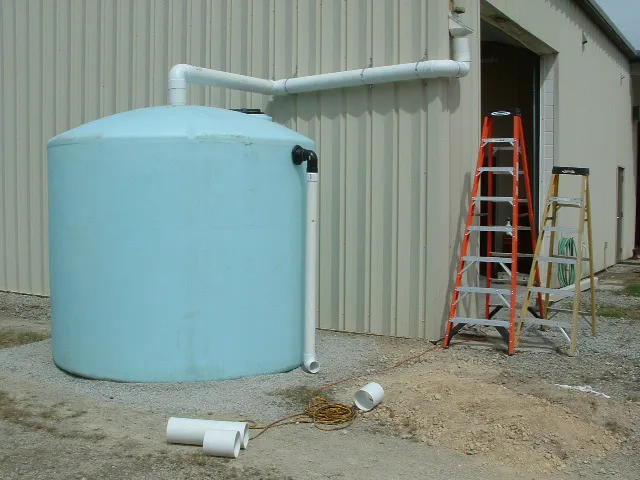
Simple containers like trash cans or barrels can be repurposed to capture rainwater, or commercial models can also be purchased. Larger containers called cisterns can also be utilized, but their size and weight make planning for their use an important concern.
Larger cisterns can store substantial amounts of rainwater but require careful planning for placement, weight, and water flow.
Essential Components of a Rainwater Harvesting System
Whether cistern or rain barrel, there are four essential components of each structure: the actual storage vessel (barrel or cistern), a gutter system to gather and direct water into the vessel, a means of controlling overflow (when the vessel is full, water must be directed elsewhere), and a means to remove water from the vessel (spigot, pump, or pipe to utilize collected water).
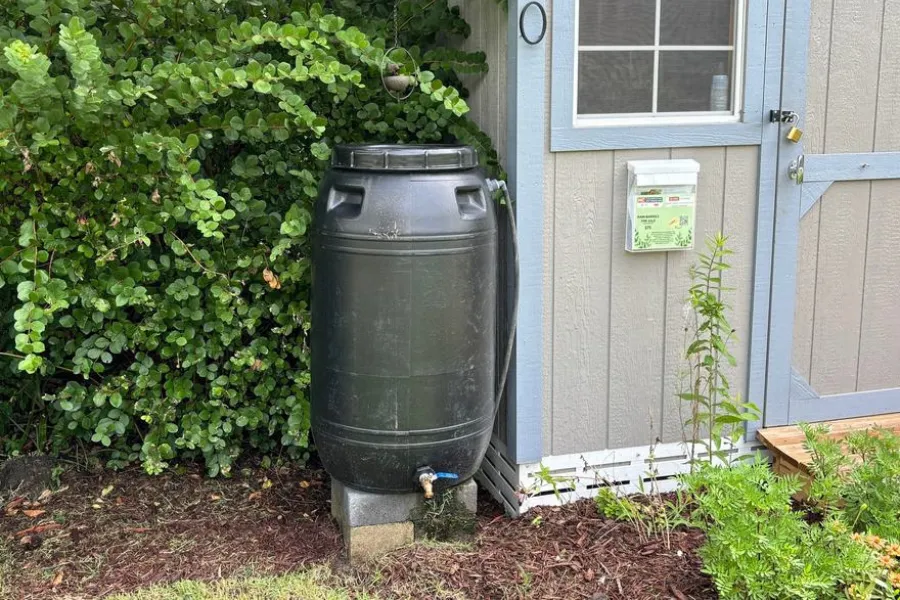
A rain barrel raised on blocks makes it easier to access the spigot and collect stored water for nearby plants.
Using Existing Gutters to Collect Rainwater
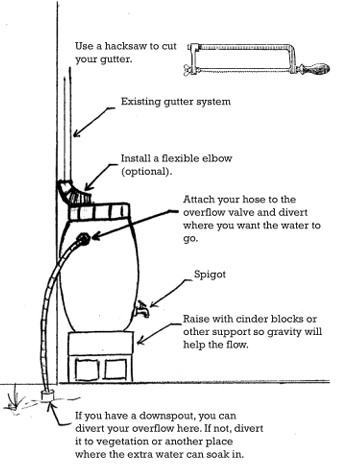
Adapting an existing gutter is the most convenient method to capture rainwater, with numerous commercial gutter adapters available that can both fill a rain barrel and then redirect flow when the barrel is full.
A rain barrel can be connected to an existing gutter and fitted with an overflow hose to direct excess water safely away from the home.
Rain Barrel Weight and Placement Considerations
A gallon of water weighs 8.34 pounds, which is an important consideration when choosing barrel materials and siting collection locations. Once a barrel is full of water, it is unlikely you can move it easily and the ground or structure on which you place your barrel should also be strong enough to support this weight.
Planning Rainwater Use for Irrigation
If you plan to harvest rainwater for irrigation, consider how much water you will need and how far from the rain barrel your target plants or crops will be. Toting multiple gallons of water over long distances is tiresome and will quickly decrease the likelihood that you will utilize a rain barrel. Plants generally require one-inch of water per week during active growth (maybe more when it is hot and dry), and smaller rain barrels can quickly be depleted with little rainfall. Always have a backup plan when that barrel runs dry.