Early Spring Lawn Care Tips for Warm Season Grass
The spring thaw has begun in earnest, leading to an explosion in lawn weeds and a quick green-up in lawn grasses. The long-range climate forecast favors an above-average warming trend but we still have a few weeks of cool weather ahead. With such drastically changing weather, early spring lawn care can become tricky. Let us discuss some simple steps to help manage this situation.
Controlling Winter Lawn Weeds in Spring
Our first issue is winter weed control. Given our early warm temperatures, many of our winter annual broadleaf weeds have grown very noticeable.
Common Winter and Cool-Season Lawn Weeds
Annual weeds such as Chickweed (Stellaria media), Hopclover (Trifolium campestre), and Henbit (Lamium amplexicaule) germinate in the fall, grow slowly during the winter, and explode in growth in the spring. Warm temperatures will eventually bring their death as they flower and set seed. Other perennial cool season weeds like White Clover (Trifolium repens) may persist all year long, but are most noticeable in the spring.
Timing Herbicide Applications for Best Results
Control of broadleaf weeds is best accomplished in late fall or early winter when plants are still small, with herbicide applications containing a combination of broadleaf weed killers (i.e. Speed Zone Southern, Ortho Weed Clear, and Weed B-Gon). If we wait until early April, many of these plants will be setting seed, and are far less responsive to herbicide.
Herbicide Safety During Spring Green-Up
We must also consider that our turfgrass is just beginning to come out of winter dormancy; a period called spring green-up. Many of the available broadleaf herbicides that can be used in warm season turf (Bermuda, Zoysia, St. Augustine, and Centipede) warn against applications until several weeks after spring green-up or after several mowings. Centipedegrass, which is the predominant grass type in Pamlico County, is especially sensitive to herbicide products containing the active ingredient 2,4-D. As 2,4-D is common among our broadleaf weed killers, homeowners should follow herbicide labels carefully.
Using Weed & Feed Products Effectively
Weed & Feed Products contain both fertilizer and weed control herbicides. These products work best on small weeds and require moisture to be present on foliage to help activate the herbicide. Ideally, splitting these applications (weed control and fertilization) is more effective, but these products provide greater convenience. For spring applications of Weed & Feed, follow the label directions carefully and prioritize the weed control aspect of these products. For recommendations on weed control, visit the NC State Extension Turf website and explore the weeds tab. Within this site, you can select from numerous weeds found in North Carolina and find recommended control options.
Spring Lawn Fertilization for Warm Season Grasses
When to Fertilize Warm-Season Turfgrass
Our second issue involves fertilization. Warm season grasses do not begin active growth until soil temperatures rise in the spring. Early warm temperatures have accelerated green-up this year, but I urge caution before rushing to fertilize your lawn. Fertilization of Zoysia, Bermuda, and St. Augustine should probably be delayed until around April 15 when chances of frost are remote.
Fertilizing Centipedegrass Properly
Fertilization of centipedegrass should probably be delayed until May when this turf has been actively growing for several weeks. Centipedegrass is a low maintenance grass, requiring few inputs. A single application of nitrogen applied in May at approximately 0.5 pound of nitrogen per 1000 square feet is usually all that is required. On sandy soils, an additional 0.5 pound of nitrogen can be applied in July or August. High soil phosphorus levels are detrimental to centipedegrass, so it is best to only apply phosphorus if a soil test requires it. Potassium can be applied along with nitrogen and generally is beneficial to most soils in Pamlico County.
Understanding Fertilizer Labels (N-P-K)
When choosing fertilizer, remember that the three numbers (N-P-K, 8-0-24) you see on the bag represent Nitrogen, Phosphorus, and Potassium. For centipedegrass, choose products that contain zero phosphorus unless you have a soil test that indicates a deficiency. To learn more about fertilization and general maintenance of turfgrass, you should visit the NC State Extension Turf website and review the lawn maintenance calendars available for each turf type.
Managing Lawn Pests and Diseases in Spring
Identifying and Managing Large Patch Disease
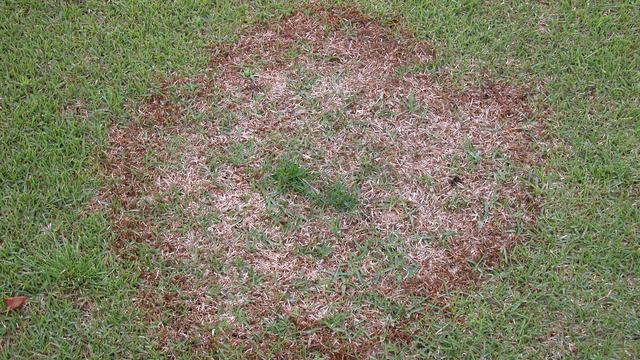
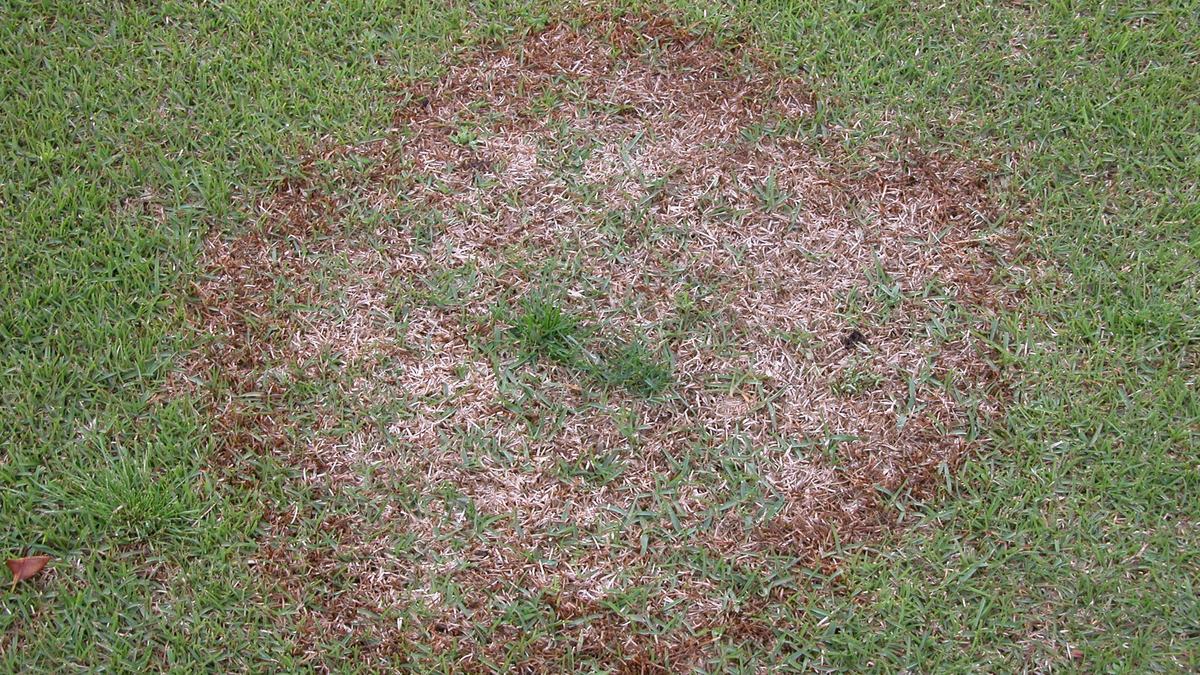
Our last issue is pests (insects and diseases). As lawns green-up, you may notice areas of circular brown dead grass that died because of large patch disease (Rhizoctonia solani). Many of these areas will slowly recover over the summer, so be patient. Spot applications of fungicide applied during spring green-up may help with the prevention of additional disease development while temperatures are still cool, but Large Patch is best controlled on a preventative basis with targeted fungicide applications in the fall when soil temperatures begin to drop below 70°F. For more information on Large Patch, visit this NC State Extension Turf note on Large Patch.
Controlling Mole Crickets in Lawns
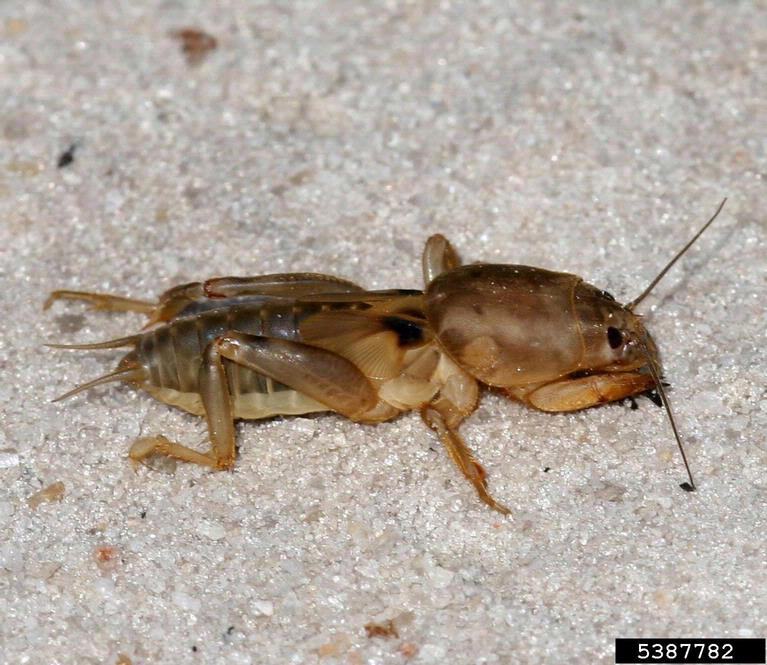
Another pest of concern that we should be on the lookout for is mole crickets. Mole crickets tunnel through turf, pushing up roots, and generally create an unthrifty turf. Mole crickets can cause severe damage, especially in areas with sandy or loamy soils. Insecticide applications applied in early spring may help reduce the numbers of adult insects before they have a chance to lay eggs. Otherwise, June is the best time for control when insects are small and more susceptible to insecticide. To learn more about mole cricket control, visit this NC State Extension Turf note on mole crickets.
Lawn Care Resources and Contact Information
If you have additional questions or concerns for your turf, please visit our office or contact Daniel Simpson at 252-745-4121 or Daniel_simpson@ncsu.edu.