(Taken from this article written by NC State Extension Entomologist Matt Bertone)
Busy as a Bee!
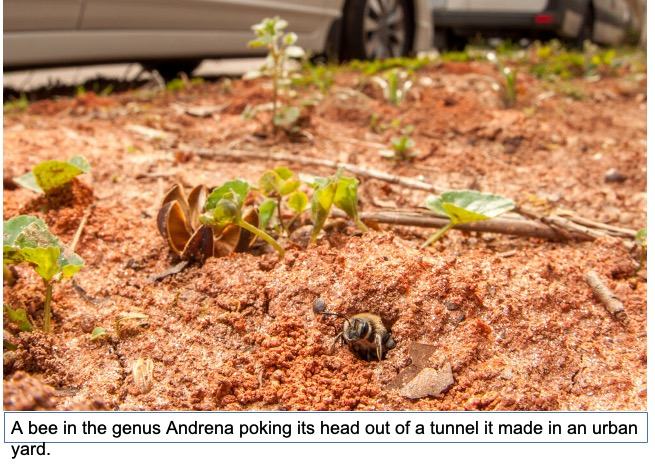
As the warm weather continues to build, insects and other animals are becoming more active. This may include insects like paper wasps, yellowjackets, and hornets that are now becoming active and emerging from their resting sites. However, in this article, lets discuss another close relative you may see in abundance right now: native, solitary, ground-nesting bees!
There are many species of native bees in NC (for more information see this wonderful bee guide, The Bees of North Carolina Identification Guide). Ground-nesting bees can be found throughout the state and are active during warm parts of the year; however, the most conspicuous activity typically happens in March when dozens to hundreds of bees emerge from the ground after developing as larvae the year before. Small mounds of loose soil pop up, especially in bare patches of ground where the vegetation is not very dense.
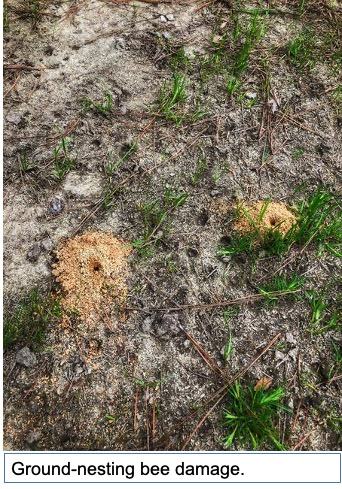
When really active, numerous bees fly around the area like a giant bee metropolis. The bees’ mate, and the industrious females collect pollen to provision cells in the ground where the eggs will be laid. Many people cringe or panic at the mere mention of bees, let alone hundreds of them flying around one’s yard. But fear not, these bees are solitary (they nest in a group but do not have a colony to defend) and are not aggressive.
These bees are not only native, but are wonderful pollinators of spring flowers. They are also only active for a few weeks, at which time the adults die out, leaving their larvae to develop underground; thus, we suggest leaving them alone, if possible. It can be a safe and wonderful experience seeing these insects out and about, and they are an integral part of our local ecosystem.
If you really must get rid of these bees, then try irrigating the turf heavily, or fertilize with organic matter, and use ground covers or heavy mulches in areas of bare soil. In areas where nests are present, tilling of the soil may help partially destroy tunnels, but establishment of dense turf is the best discouragement to further nesting. Chemical control options are available but are rarely required. Most common turf insecticides with bees on the label will provide control. However, the best defense is to promote dense vegetation or turf to discourage bees from nesting on your property. But if you can stand them for a few weeks, please let them BEE!!!
To learn more about ground nesting bees, visit the Extension note, Ground-Nesting Bees in Turf. If you have questions or would like to discuss this topic further, please contact Daniel Simpson at 252-745-4121 or daniel_simpson@ncsu.edu.
Written By

Contributors

More About