Moles have been a consistent problem this summer, with activity evident across all of Pamlico County. Tunneling by moles affects rooting and turf growth, and can lead to scalping of turf during mowing. If your yard is sandy and less compacted, then mole tunneling can be quite destructive.
What Do Moles Eat and How Do They Damage Plants?
Moles primarily feed on worms, insects, grubs, and snails. They typically have little interest in your plants or flowers. However, their tunneling activity disturbs plant roots and exposes them to drying air.
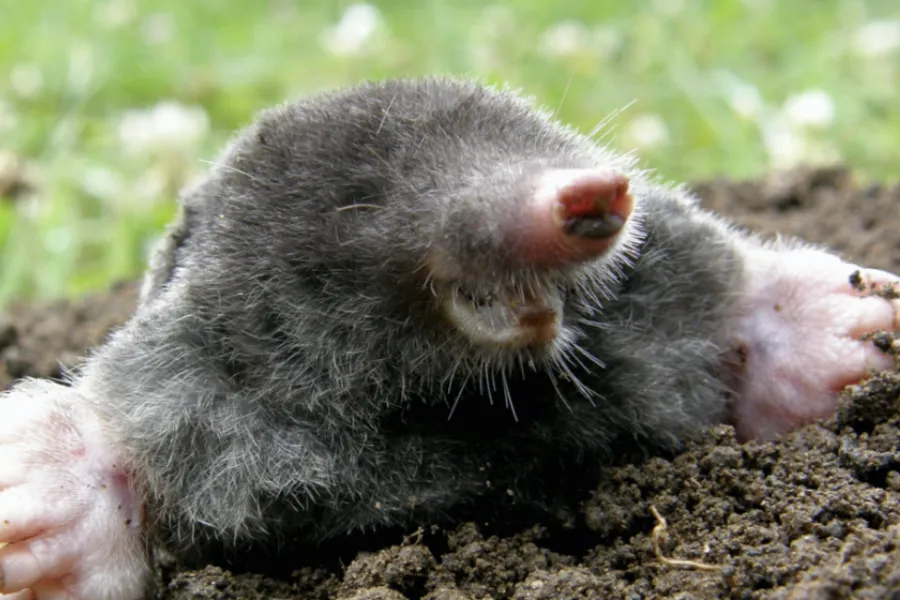
Moles use their powerful front feet and claws to tunnel through soil in search of food.
Why Mole Control Is Difficult
Control of moles is a laborious process with no consistently reliable options. Since moles are constantly feeding and moving around, it is difficult to predict where they will be at any time. Lethal trapping and legal pesticide control products are the only means to reduce the population of moles in your yard. However, this will not prevent other moles from entering the area and resuming activity.
How to Get Rid of Moles in Your Yard
Trapping Moles
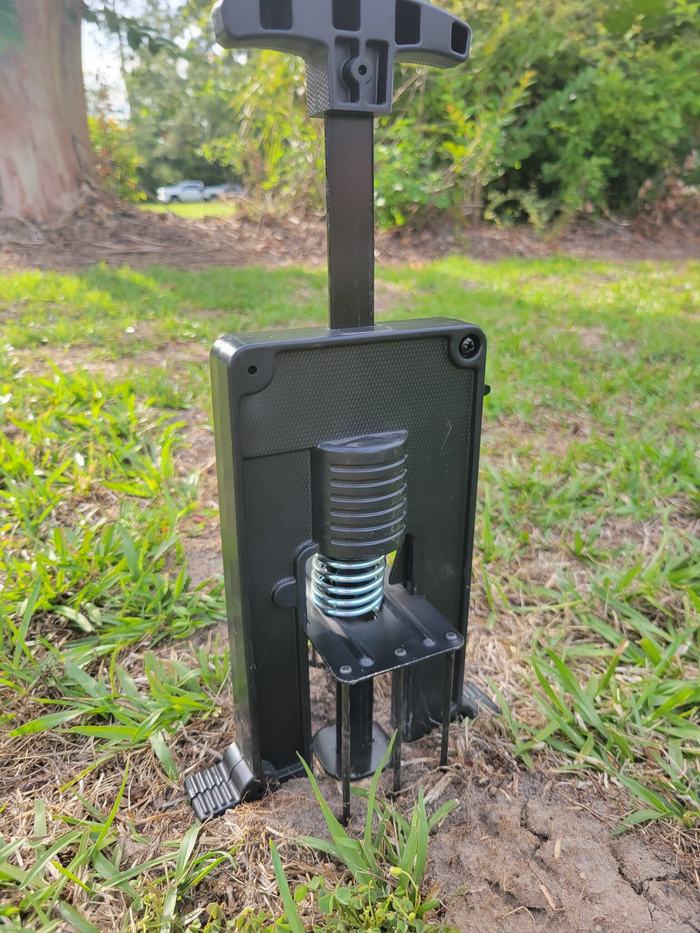
Physical trapping can be successful, but multiple traps are recommended, and these traps should be rotated constantly to intercept moles. Look for the most recent tunneling activity and place spear traps over these tunnels. Depress the tunnel with your foot, then set the trap in this depression. As moles move through the tunnel and encounter this depression, they will trigger the trap as they attempt to reopen this space. Body traps are also available but require the user to dig a hole in an active tunnel to place the trap. For more information on trapping moles, review the Clemson Extension note titled “How to Trap Moles”.
A harpoon mole trap placed over an active tunnel can help reduce mole activity in the lawn.
Mole Baits, Repellents and Gas Products
Poison mole baits are available for use, but you must follow the directions carefully. These products are short-lived but have shown effectiveness in some locations.
Mole repellents may also provide temporary reduction in activity, but environmental conditions (rain) will ultimately determine how long the product remains effective. Gas producing products may also be purchased, but are rarely effective as tunnel systems are lengthy and gas easily dissipates into porous soil.
Does Grub Control Reduce Mole Activity?
Control of insects or grubs might reduce activity in some locations, but rarely provides the level of control most homeowners desire. Products like “Milky Spore” may be promoted as an alternative control measure that reduces the white grub population in turf. However, this bacterial product only controls Japanese beetle larvae and takes several months to develop.
More Information About Controlling Moles
For more information on controlling moles in turf, review this NC State Extension Mole note. You may also contact Pamlico County Extension Agent Daniel Simpson at 252-745-4121 or Daniel_simpson@ncsu.edu.