Over the past several weeks the Extension office has assisted several clients with evaluating and diagnosing soil related issues that hinder plant growth. Homeowners may not be aware of the role soil plays in plant health and how small adjustments can create long term impacts. Let us discuss one of the most common soil related issues and how it can be addressed to improve plant performance.
The Lime Effect
Understanding the Role of Soil pH in Plant Health
How Soil pH Affects Nutrient Availability
Plant health and productivity is directly related to the ability of its roots to find nutrients and water to sustain cellular function. Soil pH is an essential component of this process and can affect root growth and the availability of soil nutrients and the fertilizer you apply. With pH values near 6.0-6.5, nutrients become more accessible to plants. As pH values become excessively low or high outside of this range, nutrients can become less available and others can become toxic.
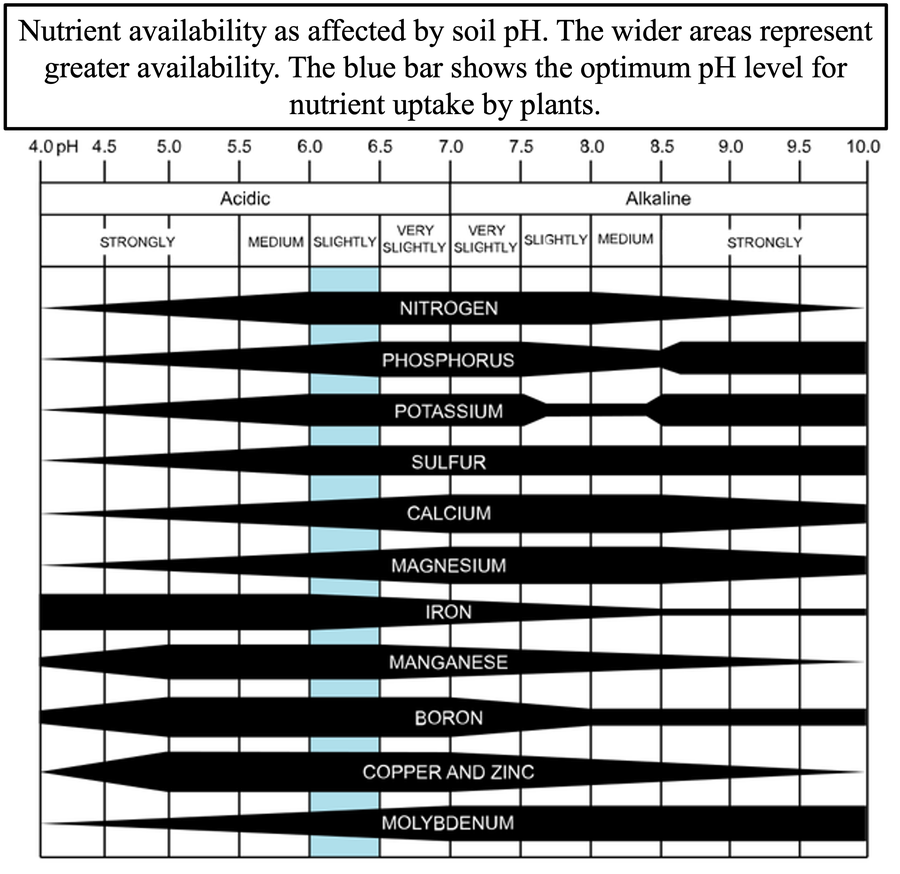
Nutrient availability changes as soil pH shifts, with most nutrients becoming more accessible to plants within an optimal pH range.
Symptoms of Improper Soil pH
Plants may express their dislike for current pH levels by exhibiting symptoms of nutrient deficiencies. This includes stunting, changes in color, and dieback of plant tissue.
Example: High pH in Centipedegrass
A common symptom homeowners might see is yellowing of centipedegrass in spring when pH values are too high and iron becomes deficient. These high pH values will result in the decline of centipede turf and can be avoided by monitoring pH levels and avoiding over liming.
Adjusting Soil pH with Lime or Sulfur
Soil pH can be raised with lime or lowered with elemental sulfur. Homeowners should only apply these products if a soil test indicates the need to adjust soil pH.
Choosing the Right Type of Lime
Dolomitic lime is a preferred choice for sandy soils and soils lower in magnesium. Calcitic lime is also available and is sufficient if magnesium is not required. Finely ground “Ag Lime” or “pelletized lime” has no substantial difference in liming effect, meaning you can use either option.
Soil Testing in North Carolina
Soil testing is available through the North Carolina Department of Agriculture & Consumer Services Soil Testing Lab. These testing services are free of charge between April and November, but peak season testing fees of $4.00 per sample are required November through March (Soil sample fee will increase to $5.00 starting November, 2026). Soil sample supplies needed to complete an NCDA soil test are available through your local Cooperative Extension office. To learn more about soil testing visit this NC State Extension fact sheet titled ‘A Gardener’s Guide to Soil Testing’.
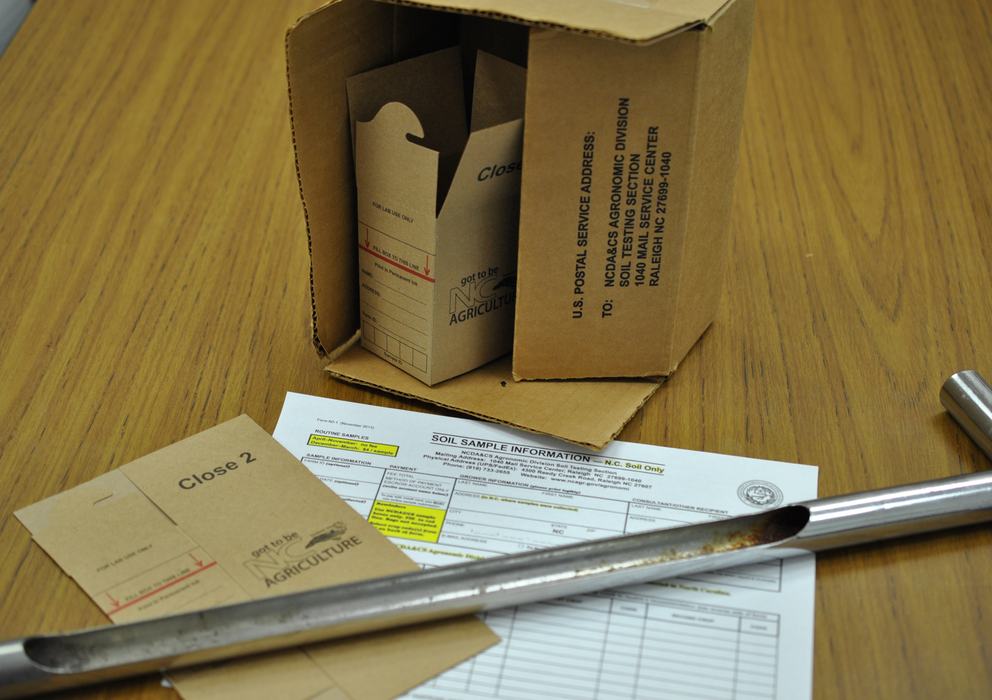
Collecting a soil sample with a probe and testing kit is the first step toward accurately adjusting soil pH and improving plant performance.
Using Soil Testing Results for Plant Selection
With these soil test results, homeowners will be provided with a suggested pH growing range for their crop and recommendations for adjusting pH, if required. Not every plant requires the same pH range and it is important to consider this factor when making plant choices for your landscape.
Managing Naturally High pH Soils
Naturally high pH soils often contain shell material which is a lime source. Homeowners will have great difficulty lowering pH values in this situation and should avoid planting acid-loving plants like blueberries or azaleas. If you would like to learn more about different plant species and their soil requirements, you can visit the NC State Extension Plant Toolbox website. From this website you can examine thousands of plants, learn about their soil requirements, and select plants that meet your landscape needs.
Monitoring Soil pH for Long-Term Plant Health
Homeowners should consider monitoring soil pH levels if you plan to maximize plant health in your landscape. A soil test every 2-3 years is a recommended practice. If you follow these simple steps, you can help ensure your plants are provided with the best conditions for growth. If you have additional questions about soil pH or soil testing, please contact Daniel Simpson at 252-745-4121 or daniel_simpson@ncsu.edu.
Happy Gardening!
Written By