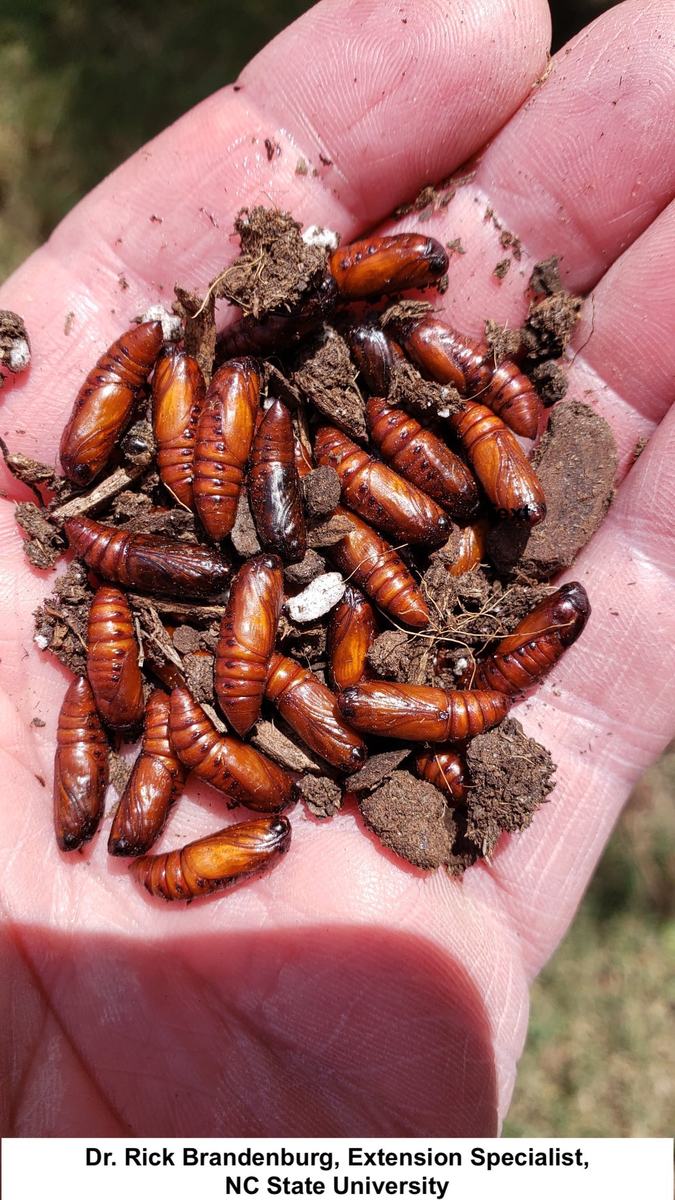
(Adapted from the article “Fall Armyworms Invade” by Minda Daughtry, Agriculture/Horticulture Agent, N.C. Cooperative Extension in Lee County)
Over the past several weeks fall armyworms (Spodoptera frugiperda) have been on the march. These insects feed on turf and pasture in large “armies” creating increasing areas of brown grass as they feed. The damage they create can be severe for newly sodded or sprigged areas, and late feeding into fall can result in little time for recovery of turf before winter.
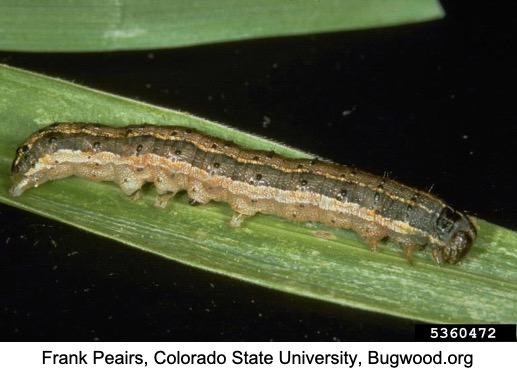
Fall armyworms are approximately 1-1½ inches long, depending on the growth stage, and can vary in color from a green to mottled brown, to almost black. Fall armyworms have wide black stripes running down each lateral side of the body. Sometimes, you will be able to distinguish four black dots on the dorsal (back) side of each segment of the abdomen and a light-colored, upside-down “Y” marking on the head capsule.
Fall armyworms have a very wide host range but generally prefer plants in the grass (Poaceae) family, low-growing herbaceous growth, and woody shrubs. Most grasses, including coastal bermudagrass, fescue, ryegrass, bluegrass, Johnsongrass, timothy, corn, sorghum, Sudangrass, and small grain crops, are subject to infestation. Hot, dry weather can intensify fall armyworm problems, especially when egg-laying adults lay their eggs in irrigated, green turf. At least some cultivars of all warm-season grasses are susceptible. Cool-season grasses like tall fescue are very favorable for fall armyworm growth and development too, and do not regenerate as readily as the stoloniferous grasses.
Fall armyworm adults migrate northward every year from southern overwintering areas. Adult armyworm moths are active at night and females lay eggs in masses of 50 to several hundred. These night-flying moths are attracted to lights and to lighter colored surfaces. Early August is a good time to start monitoring for egg masses on plants, objects, and buildings bordering turfgrass. As soon as the eggs hatch, caterpillars will immediately start feeding on nearby turf so early detection is essential to counteracting severe armyworm damage. Given the large number of insects present this year, additional damage might still be possible as a new generation starts to develop. You should continue to monitor for damage through September.