Taken from article written by Jessica Strickland, Wayne County Extension, at go.ncsu.edu/readext?817533.
Have you been finding some colorful caterpillars eating the leaves on your azaleas lately? If so, you could be looking at the azalea caterpillars. Often referred to as Labor Day worms, these caterpillars usually show up on azaleas around late August and early September.
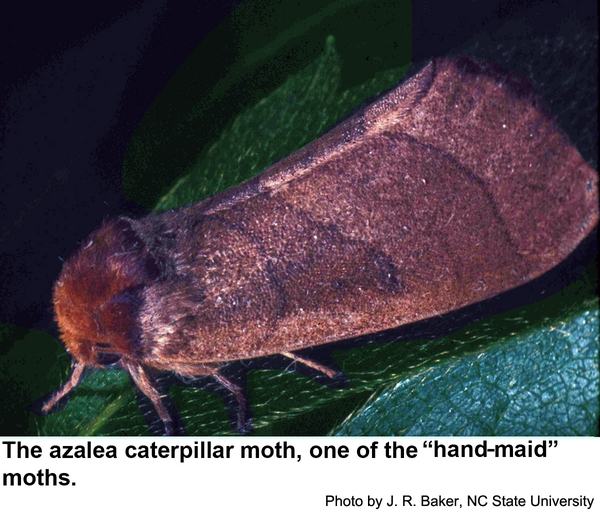
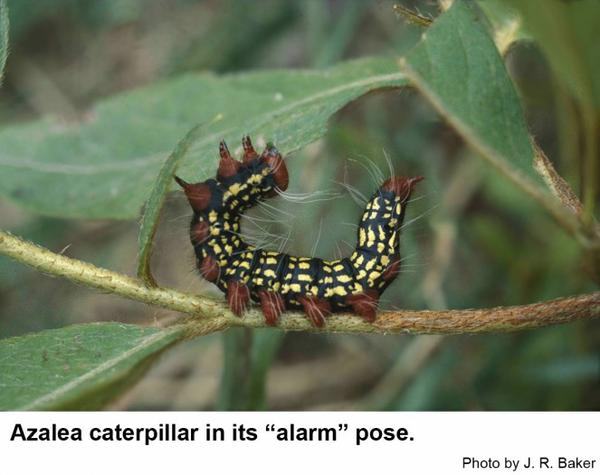
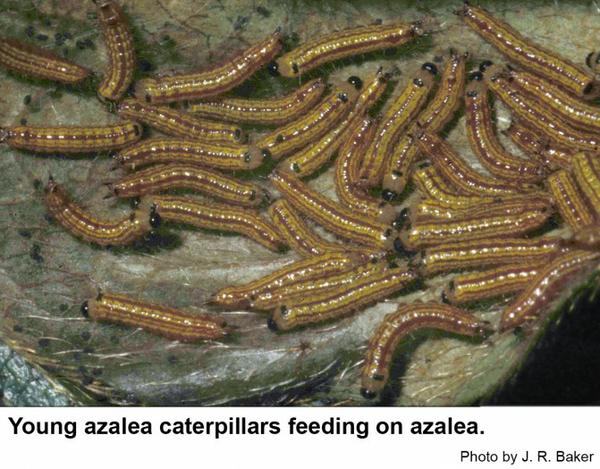
As with other caterpillars, eventually these “worms” turn into a moth. The adult moth begins flying about in early summer and deposits its eggs in masses of 80 to 100 on the underside of azalea leaves. The eggs become the azalea caterpillar. Young azalea caterpillars are small, green caterpillars that grow into purple and yellow-striped caterpillars. These young caterpillars will molt into large black and yellow-stripped worms with red heads and legs. When a caterpillar is disturbed, it will raise its head and tail to curl backwards in defense.
The caterpillars cause damage to azaleas around late August into September. When the eggs hatch, the caterpillars damage azaleas by eating leaves and can completely defoliate limbs. Because the caterpillars feed in groups, they are often not detected until a portion of an azalea is severely defoliated.
There are a couple of options for controlling azalea caterpillars. One control option is to pick the caterpillars off (do not worry, they are harmless to humans) of azaleas and discard in a bucket of soapy water. Another option if there are just a few caterpillars or a few azalea shrubs is to shake them from the shrub and step on the caterpillars to kill them (that is if you do not mind the idea of squishing caterpillars). B.t. (Bacillus thuringiensis) is an organic option that can provide control of young caterpillars. B.t. is usually marketed under the name DiPel.
If you choose to control with insecticides, Sevin (carbaryl), Orthene (acephate), and pyrethrin-based insecticides should give adequate control. When using insecticides, the best control is achieved by applying when caterpillars are first noticed. Only spray an insecticide if you discover caterpillars on your azaleas. Trying to spray when the treatment is not needed would only be a waste of time and money. As with all pesticides, remember to read and follow all label directions.
As you are working in the landscape this time of year, take the time to do some scouting for the azalea caterpillars that could be lurking in your azaleas. Catching these Labor Day worms early, can allow for better control and prevent defoliated azaleas. To learn more about azalea caterpillars, visit the NC State Extension factsheet here.
If you have questions about these or other landscape pests, please contact Daniel Simpson at 252-745-4121 or Daniel_simpson@ncsu.edu.