My Collards Have Worms
Understanding Worm Damage
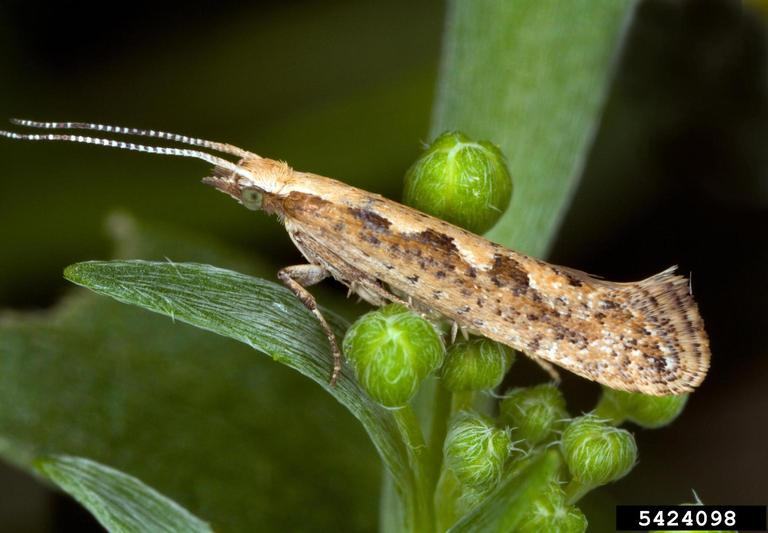
Worms (caterpillars) are the immature larval stage of various moth and butterfly species that directly feed on the leaves of many crucifer crops (collards, cabbage, broccoli, etc.). Most of these insects overwinter within or near the crop debris from previous seasons, so a good fall garden cleanup will help to reduce pest numbers in the spring.Early Detection and Prevention
Since worms hatch from tiny eggs laid by moths and butterflies, their presence often goes unnoticed until they begin to grow and devour holes in leaves. Often for every one imported cabbageworm you find, you have probably missed several. Worms will also hide in the buds and undersides of leaves making them difficult to see or treat with insecticide. Snails may also cause similar damage to worm feeding, but are easy to identify by their large numbers and slow activity.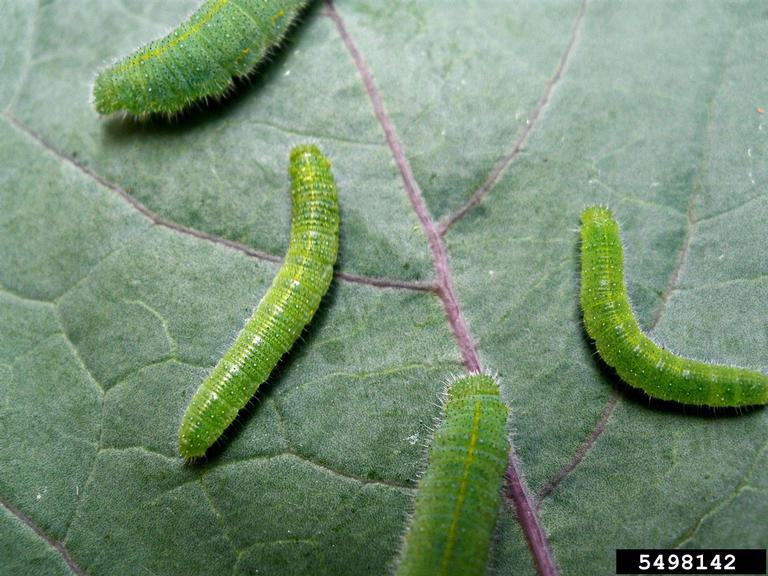
Physical Barriers for Pest Control
Control measures for worms might include using a physical barrier to exclude moths and butterflies, such as a lightweight floating row cover that is placed directly over the growing plants. This lightweight material is available from garden suppliers and is often used to aid in cold protection. However, with warm temperatures still around, you must be careful not to overheat your plants while using row covers.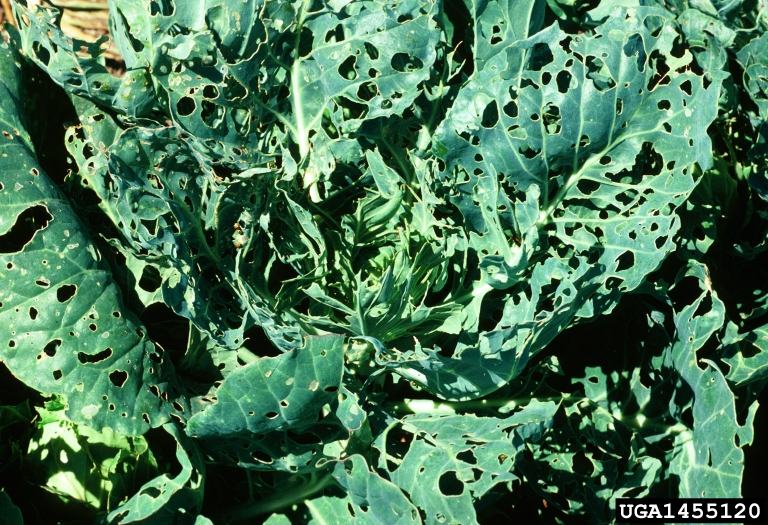
Using Insecticides Safely
Garden insecticides are most useful to control worms. Carefully read product labels when applying insecticides, especially around leafy greens. The harvest interval (time between application and harvest) should be monitored closely, since you will be consuming the foliage that is treated. Also, leafy greens have a waxy covering that causes many products dissolved in water to bead off the plant. For this reason, a surfactant might be recommended to aid in the retention of the product on the leaf surface. A common spreader/sticker product is often used for this purpose. Lastly, pay attention to the growth of the plant. Since most garden insecticides used for worms requires direct contact or feeding by the insect, reapplication will be required. As the plant grows and pushes out new leaves from its buds, this new leaf material will be unprotected from any previous application. This means a follow-up application may be needed a few weeks later as long as temperatures remain warm and insects are active. Read the label directions for the recommend reapplication period.
Recommendations for Common Insecticides
Common garden insecticides often used for worms include organically approved products like B.t (Bacillus thuringiensis, Dipel), Spinosad (Captain Jack’s Dead Bug Brew), and conventional insecticides like pyrethroids (Ortho Bug Clear), and Carbaryl (Sevin). Read and follow label directions when mixing and applying these insecticides. Mixing more product than is recommended will not aid in effectiveness. Thorough coverage is important to reach most insects, and don’t forget the underside of leaves. Hand removal of insects is also possible, but it can be difficult to remove them all. Be sure to wash crops after harvest and consume them in a timely manner.Final Tips for a Healthy Fall Harvest
If you follow these recommendations, you should be able to protect your fall harvest from hungry pests. If you have additional questions about controlling worms in your garden then please contact Daniel Simpson at 252-745-4121 or daniel_simpson@ncsu.edu.
Written By