Back in November I reminded readers to scout their yards for the presence of Large Patch disease. As soil temperatures were beginning to decline, the fungi Rhizoctonia solani was becoming active and affecting numerous lawns across Pamlico County. Now that our warm season grasses (centipede, Bermuda, zoysia, St. Augustine) have begun to green back up, you may notice circular dead areas in your lawn that were affected by this disease. Let us discuss what we can do to help alleviate this condition.
Spring Large Patch Disease
(Updated: April 28, 2025, 12:24 p.m.)
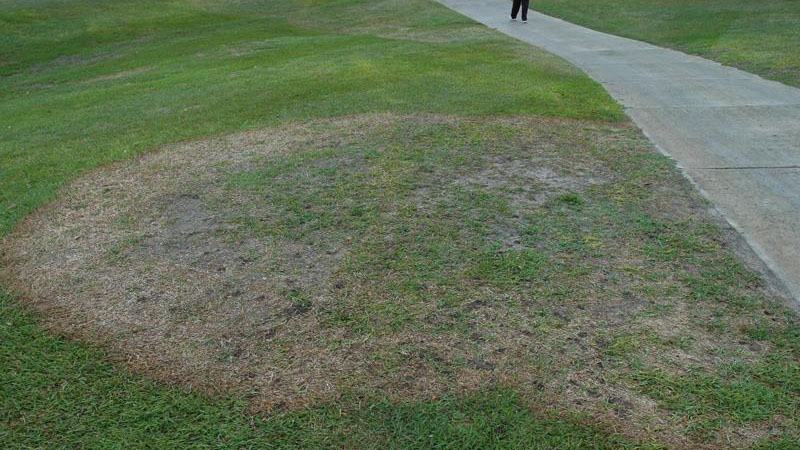
Identifying Large Patch Symptoms
Current symptoms you will see this spring include circular dead patches of turf that do not green-up with the rest of your lawn. Individual grass blades within margins of patches may be bright yellow or reddish with some green leaf tissue remaining. Give one of these blades a tug, and if the blade slips easily from the sheath, you probably have large patch.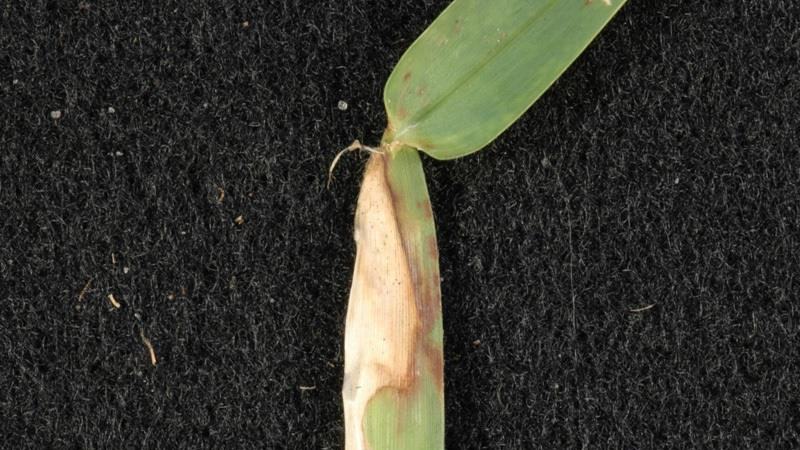
Conditions That Favor Large Patch Disease
Large patch disease is favored by cool temperatures and wet conditions. Areas in your yard that are prone to hold or channel water will usually be infected first; however, the disease can occur almost anywhere when conditions are favorable.How Fertilization Affects Disease Development
You can make the disease worse by over fertilizing with nitrogen and with early or late season nitrogen applications in spring and fall. In general, nitrogen should not be applied to warm-season grasses within six weeks before dormancy in the fall or within three weeks after green-up begins in the spring.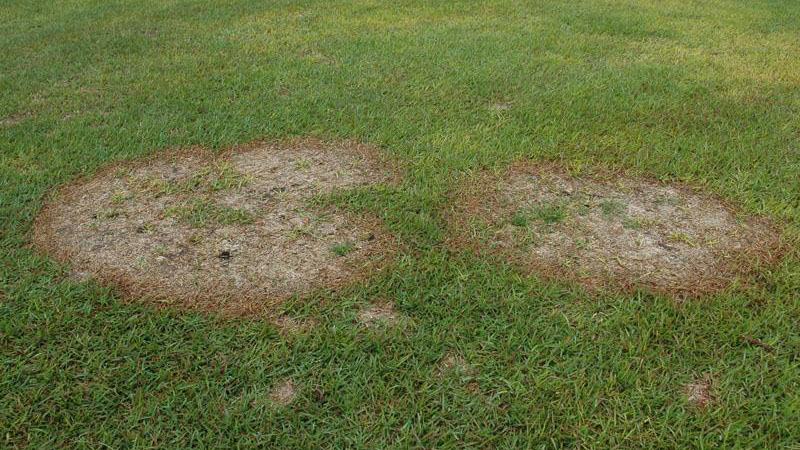
Treatment and Fungicide Applications
A well-timed fungicide application in the fall, before the disease becomes active, provides the best control. Timing of these applications should coincide with soil temperature.Fall Fungicide Timing and Application
When soil temperatures dip to 80 degrees Fahrenheit for 4-5 days, an application of a fungicide to centipedegrass and St. Augustine grass, especially to those areas of previous infection, will help decrease disease development.Spring Fungicide Applications
Spring applications of fungicide are less effective, as rising soil temperatures above 70 degrees will cause the fungus to go dormant. Spot applications of springtime fungicides can be applied to the margins of dead patches. This may help prevent further infection as temperatures continue to fluctuate.Recommended Fungicide Products
Common turf fungicides from Bayer, Fertilome, Spectracide, and Scotts, have active ingredients (propiconazole, myclobutanil, azoxystrobin) that should provide adequate control. Refer to the label for specific directions on rate and turf type.Encouraging Turf Recovery After Infection
Dead areas created by this disease can be encouraged to fill back in by the rhizomes and stolons (runners) as warm spring weather arrives. Proper fertility and weed management will help to encourage regrowth.Fertilizer and Weed Control Tips for Recovery
Do not apply a preemergence weed control product to these areas, as many of our preemergence products inhibit root growth. New runners trying to grow back into these areas will have a difficult time rooting through these herbicide applications. Most grasses can fill back into damaged areas during one growing season. To encourage spread, continue to mow and provide irrigation to keep soil moist. Applying nitrogen fertilizer at a rate of 0.25 pound per 1000 square feet when temperatures are consistently above 70 degrees and grass has green-up for several weeks can help expedite new growth. Widespread applications of fungicides are generally not needed and can be quite costly. Just be familiar with the symptoms of this disease and keep an eye out for progression.
Contact Information for More Details
If you have questions about this disease or other turf related issues, please feel free to contact Daniel Simpson at 252-745-4121 or daniel_simpson@ncsu.edu.
Written By

More About
- Commercial Horticulture, Nursery & Turf
- Pest Management
- Lawn & Garden
- lawn care
- Turf management
- Bermudagrass
- Zoysiagrass
- warm season grasses
- St Augustinegrass
- Centipedegrass
- turfgrass diseases
- Large Patch Disease
- NC State Extension
- rhizoctonia solani
- lawn disease prevention
- spring lawn maintenance
- fungal lawn diseases
- lawn fungicide
- turf fungicide application
- lawn patch recovery
- soil temperatures