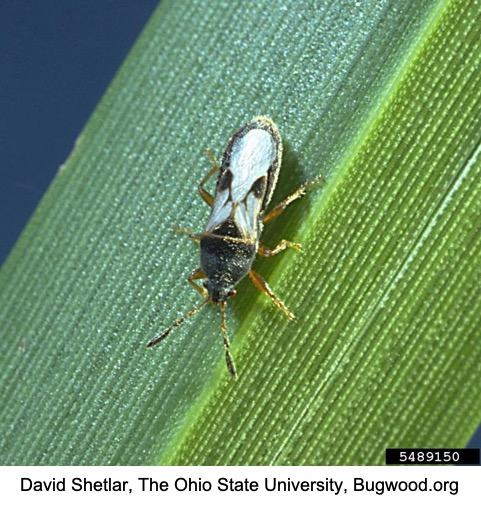
Most homeowners in Pamlico County are familiar with fire ants, but you may have never heard of Chinch bugs. These insects can be a serious pest of St. Augustine yards and occasionally zoysiagrass. Symptoms of chinch bug feeding can resemble drought stress, so now is a good time to start looking for these insects.
Chinch bugs rarely infest centipedegrass, and bermudagrass can usually outgrow any damage they might bring. I normally see higher infestations of chinch bugs in the Oriental area where more St. Augustinegrass is growing in yards. However, if you have a nice sunny location with St. Augustinegrass mixed in, you may notice this pest. Because these insects are extremely small, homeowners will probably notice the browning of the turf before you ever notice the insects that are causing the damage. Chinch bugs injure turf by sucking fluid from the grass and injecting saliva into the plant. This disrupts the movement of water and nutrients leading to wilting and discoloration. Large numbers of chinch bugs will eventually kill grass so proper identification of chinch bug damage is important.
If you notice areas of St. Augustine or zoysiagrass turning brown, get down on your hands and knees and pull back the leaf blades in the areas of transition from brown to green grass. Chinch bugs are tiny, so try not to focus on a single spot, but look at the grass from a wide angle. You may notice many insects moving about. Chinch bug generations overlap, so you could find small immature nymphs that are reddish-orange in color or more mature insects that are black with distinctive white wings that cross their back. Since these insects are so small, identifying them within the turf can be difficult. Another option to slow these insects down and contain them for identification, is to cut a piece of infested sod and place it into a Ziploc bag. Put the bag in a sunny location, and within a few minutes the insects will start to collect on the inside of the bag.
Infestations are best controlled with an insecticide application containing active ingredients like bifenthrin, acephate, or combination products that contain bifenthrin and imidacloprid. Combination products that contain systemic insecticides (imidacloprid) can help provide good initial knockdown and longer residual control. Make sure to monitor the turf following these applications to determine if your efforts have been effective. Repeat applications may be required. Always read and follow label directions as some products may require irrigation or rain to be effective.
If you would like to learn more about chinch bug management you can visit the NC State Extension TurfFiles website. Under the insect tab you will find a note for chinch bugs describing their biology and control recommendations.
If you have additional questions regarding these subjects please contact Daniel Simpson at daniel_simpson@ncsu.edu or 252-745-4121.
Recommendations for the use of agricultural chemicals are included in this publication as a convenience to the reader. The use of brand names and any mention or listing of commercial products or services in this publication does not imply endorsement by NC State University or N.C. A&T State University nor discrimination against similar products or services not mentioned. Individuals who use agricultural chemicals are responsible for ensuring that the intended use complies with current regulations and conforms to the product label. Be sure to obtain current information about usage regulations and examine a current product label before applying any chemical. For assistance, contact your local N.C. Cooperative Extension County Center.